
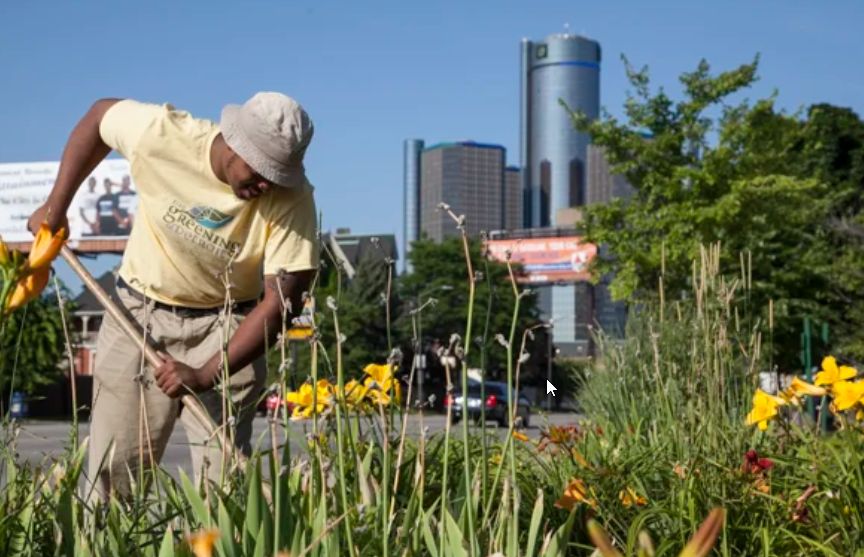
Since its founding in 1989 by Elizabeth Gordon Sachs, The Greening of Detroit has been on a mission to revive the city’s once?lush urban forest while empowering its residents. Back then, Detroit had already lost more than half a million trees to Dutch elm disease, storms, and urban decline. The nonprofit began with fundraising and quickly moved into direct community tree planting, launching its first major project along Larned Avenue .
Over the decades, the organization’s work expanded to include programs like TreeKeepers Kids, Camp Greening, and Green Corps to educate youth in environmental stewardship and grow early-career skills . Parallel to youth initiatives, the Detroit Conservation Corps was launched in 2010, providing adults—especially those facing employment barriers—with pre-apprenticeship training, job readiness coaching, industry certifications, and stipends in green-sector work .
Today, The Greening of Detroit has planted well over 147,000 trees across Detroit, Highland Park, and Hamtramck, transforming vacant lots, parks, and public spaces into flourishing green areas . The organization also manages the Walter I. Meyers Nursery—a 72?acre site in Rouge Park where they grow saplings, harvest mature trees, and even operate a retention pond that captures stormwater and supplies irrigation, while offering environmental education .
A major undertaking, the Detroit Tree Equity Partnership, launched in 2022 in collaboration with the City of Detroit and DTE Energy, aims to plant 75,000 trees over five years in the neighborhoods that need them most. As of late 2024, 25,000 have already been planted—adding canopy coverage, cooling heat-stressed neighborhoods, improving air quality, and creating local green jobs .
Through every phase, Forsaking the old top-down approach, The Greening of Detroit has prioritized community engagement—ensuring that residents not only receive trees, but are also active partners in selecting, caring for, and advocating for them. This shift has helped rebuild trust, walk back resistance rooted in past neglect, and deepen neighborhood involvement in shaping their greener future.
https://www.greeningofdetroit.com/
