
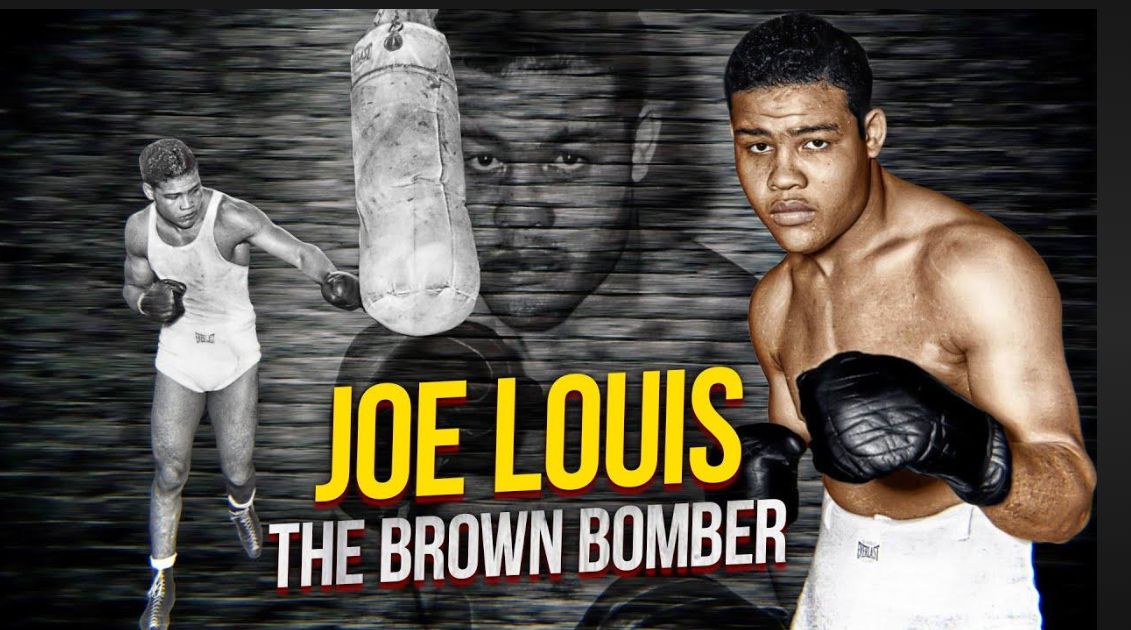
Joe Louis was more than a boxing champion—he was a national hero, a Detroit icon, and a symbol of American unity during some of the nation’s most turbulent decades. Born in 1914 in Lafayette, Alabama, Joseph Louis Barrow—better known as Joe Louis—moved with his family to Detroit at the age of 12. It was in Detroit, among the growing African American population during the Great Migration, that Joe Louis would rise from poverty to become one of the most celebrated athletes in world history.
Detroit’s Adopted Son
Detroit gave Joe Louis opportunity—and he gave Detroit pride. The city’s buzzing industrial economy drew the Louis family north, and it was at the Brewster Recreation Center, not far from Detroit’s Black Bottom neighborhood, where Louis first donned a pair of boxing gloves. His natural talent was quickly recognized, and by the early 1930s, Louis had launched a professional career under the nickname “The Brown Bomber.”
As Louis climbed the ranks of boxing, Detroiters of all backgrounds rallied behind him. In a deeply segregated America, Joe Louis broke through racial barriers not only by winning but by embodying dignity, humility, and quiet strength. Unlike the brash Jack Johnson before him, Louis followed advice to stay modest and avoid controversy—a strategy that helped white America embrace him as well. Still, in Black Detroit neighborhoods, Louis was revered as a hometown hero who was “one of us.”
Victory Beyond the Ring
One of Joe Louis’s most famous bouts came on June 22, 1938, when he faced German boxer Max Schmeling. Their first match in 1936 had ended in Louis’s defeat—something the Nazi regime touted as proof of Aryan superiority. But the 1938 rematch was different. As war clouds gathered over Europe, the fight carried global significance. In front of 70,000 fans at Yankee Stadium—and millions more listening by radio—Louis knocked Schmeling out in the first round. It wasn’t just a victory for Louis; it was a knockout blow to Nazi propaganda and a defining moment for America’s fight against fascism.
In Detroit, celebrations erupted. Churches rang bells, people danced in the streets, and Black residents especially felt a surge of hope and national pride. As journalist Jimmy Cannon famously wrote, “Joe Louis is a credit to his race—the human race.”
A Legacy Etched in the City
Joe Louis’s influence stretched well beyond his boxing career. During World War II, he supported the troops, raising millions in war bonds and even serving in the U.S. Army. Despite his sacrifices, Louis faced financial hardship later in life due to tax issues and inadequate support. Still, he remained beloved, especially in Detroit.
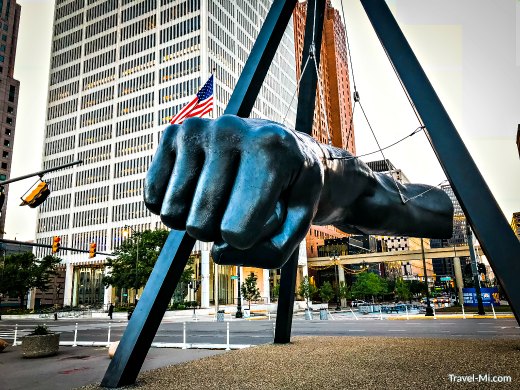
Today, the Joe Louis Arena—home to the Detroit Red Wings until 2017—stood for decades as a testament to his legacy. A massive sculpture of his arm and fist still hangs in downtown Detroit near Hart Plaza. It’s more than a tribute to a boxer—it’s a reminder of a man who fought for dignity, unity, and pride.
Remembering the Champion
Joe Louis passed away in 1981, but his story continues to inspire. For Detroiters, he represents the best of the city: grit, resilience, and the power to overcome. From the Brewster Projects to Madison Square Garden, from a segregated America to the global stage, Joe Louis showed the world what it meant to stand tall—even when the odds were against you.
