
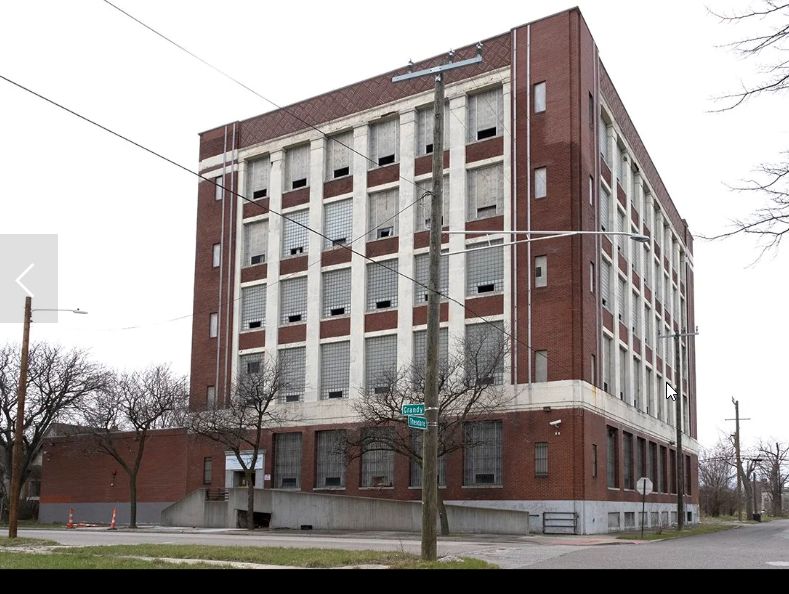
The Building: From Cigar Factory to Redevelopment Prospect
In 1924, Detroit’s cigar industry was booming, and with it rose one of the city’s many industrial landmarks: the cigar factory on Grandy Street, designed by Albert Kahn. The building was created for the Mazer-Cressman Cigar Company, itself the product of a merger between Detroit’s Mazer Cigar and the Allen R. Cressman Sons Company of Philadelphia. The factory replaced an earlier structure lost to fire, and when it opened, more than a thousand workers celebrated its completion. The building, functional yet elegant in the Kahn style, symbolized the confidence of an industry that once ranked among Detroit’s leading employers.
Detroit’s Cigar Industry
Few today realize that before automobiles dominated Detroit’s economy, cigars were a major force in the city. By the early 20th century, Detroit factories were producing over a million cigars per day. Immigrant workers, many from Germany and Eastern Europe, brought with them the skills of rolling, bunching, and shaping cigars by hand. Women made up a large share of the workforce, sitting at long benches in airy factories like the one on Grandy Street. The labor was meticulous and repetitive, but it demanded skill — steady hands, nimble fingers, and great patience. Detroit’s proximity to imported Cuban tobacco and its rail and shipping networks made it an ideal hub.
Labor and Struggles
The cigar trade was not without conflict. Workers often clashed with management over wages and conditions. In 1916, a wave of strikes began when women at one factory demanded equal raises to those given their male counterparts. By the next week, nearly every major cigar plant in the city had joined the strike. At the Grandy Street factory itself, a sit-down strike in 1937 saw hundreds of women refuse to leave their benches until they won recognition of their union and a modest pay increase. These moments highlighted not just Detroit’s industrial might but also its role in the history of labor rights, particularly for women.
The Industry’s Decline
The prosperity did not last. By mid-century, machine-made cigarettes had eclipsed hand-rolled cigars in popularity and affordability. Many Detroit cigar companies either consolidated, moved, or closed. Some of their once-busy factories were abandoned, while others were repurposed for new industries or social services. The Grandy Street building, too, saw changing uses: it once housed city departments, social service agencies, and even printing operations. But with each change, its connection to Detroit’s cigar-making heyday faded from public memory.
The Building Today
Now a century old, the Grandy Street cigar factory remains a sturdy reminder of that forgotten era. Its walls bear the marks of years of labor and adaptation. Though many windows are broken and parts of the facade are crumbling, the structure itself endures — true to Kahn’s reputation for durable, adaptable design. Preservationists argue it deserves protection, not only as an example of Detroit’s industrial architecture but also as a monument to the men and women whose skilled hands once supplied cigars to the nation.
Legacy
This factory represents more than bricks and mortar. It tells the story of a city whose industries stretched beyond automobiles, of immigrant families who found livelihoods in tobacco, and of women who stood together for fair pay in an age when their voices were often dismissed. As Detroit looks for new ways to honor its history while building for the future, the Grandy Street cigar factory offers both a challenge and an opportunity: to save a structure that powered a lost industry, and to remember the people who rolled, packed, and shipped Detroit’s cigars to the world.
