
By Rev. Richard Dalton
LookUpDetroit.com
During World War II, Americans were asked to make sacrifices in countless ways. Families planted Victory Gardens, collected scrap metal, rationed gasoline and food, and purchased war bonds. Yet one of the most unusual contributions came from something growing wild along Michigan’s roadsides and farm fields: milkweed pods.
Today, many people consider milkweed a weed. During World War II, however, it became a strategic resource that helped save the lives of American sailors and airmen.
A Critical Wartime Need
Before the war, the United States imported a lightweight fiber called kapok from Southeast Asia. Kapok was prized because it was naturally buoyant and was used to fill military life jackets.
When Japanese forces occupied much of Southeast Asia, those supplies were cut off. America suddenly needed a domestic replacement.
Researchers discovered that the silky white floss inside common milkweed pods had remarkable qualities. It was lightweight, naturally water-resistant, and floated exceptionally well. The military soon adopted milkweed floss as an important substitute for kapok.
Michigan Joins the Effort
Michigan’s countryside was filled with common milkweed growing along:
- Rural roads
- Fence rows
- Railroad tracks
- Vacant fields
- Farm edges
- Open meadows
What had once been ignored suddenly became valuable.
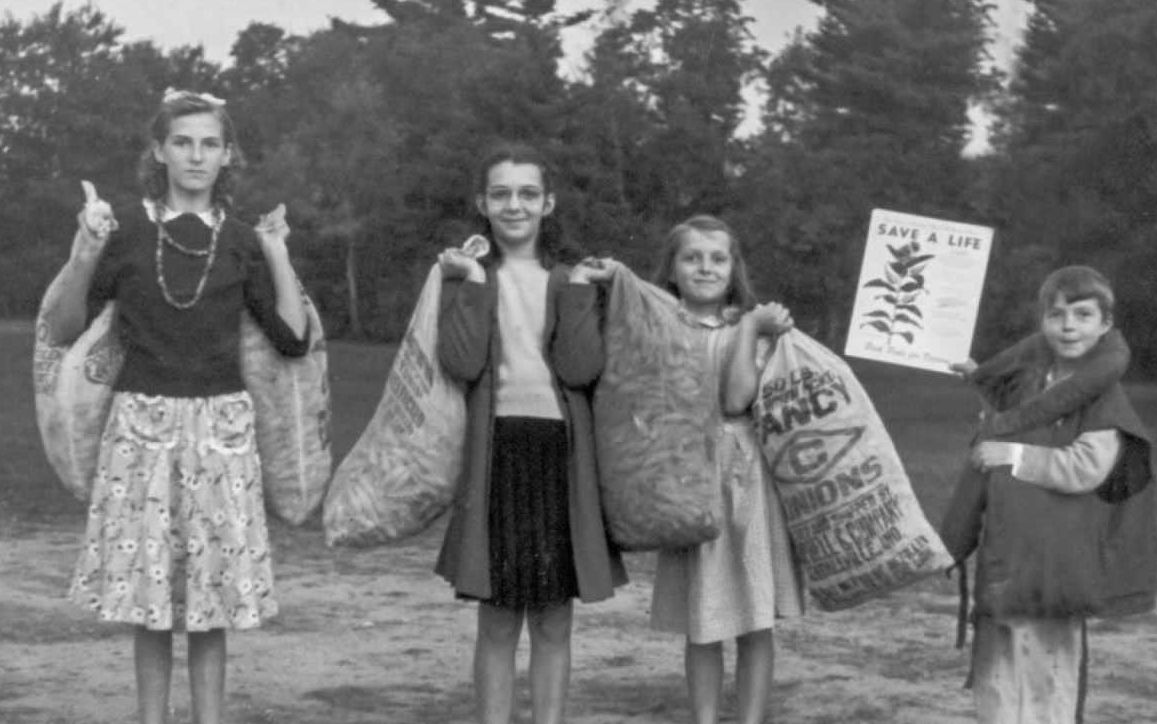
Schools throughout Michigan encouraged students to gather mature, dried milkweed pods each autumn. Boys and girls carried burlap bags into fields and ditches, carefully picking pods before the seeds scattered in the wind.
Many communities established collection stations where the pods were dried and prepared for shipment to processing plants.
Children on the Home Front
Thousands of Michigan schoolchildren became part of the war effort.
Teachers organized collection drives.
4-H Clubs participated.
Boy Scouts and Girl Scouts helped gather bags of pods.
Church youth groups and civic organizations joined in.
Some schools even held friendly competitions to see which classrooms or communities could collect the most milkweed.
The children may never have seen the soldiers whose lives they were helping save, but they knew they were doing something important for their country.
Saving Lives at Sea
The fluffy fibers inside each pod were carefully separated and cleaned before being packed into military life preservers.
The results were remarkable.
Milkweed floss was:
- Naturally buoyant
- Extremely lightweight
- Resistant to water
- Excellent at trapping air
It took the floss from hundreds of milkweed pods to fill a single military life jacket.
Every completed vest represented countless hours spent by children and families gathering what had once been considered an ordinary roadside plant.
An Often-Forgotten Michigan Story
Today, few people remember these collection drives.
Yet they remind us that wars are not won only by soldiers on distant battlefields. They are also supported by citizens at home who willingly contribute whatever they can.
Michigan families demonstrated that everyone—even children—could make a meaningful difference.
Their efforts became one small but important chapter in America’s victory during World War II.
A New Appreciation for Milkweed
Ironically, milkweed has become important once again.
Today, conservationists encourage people to plant native milkweed because it is the primary food source for the beautiful monarch butterfly. Gardens, schools, parks, and nature preserves throughout Michigan now cultivate milkweed to help restore declining monarch populations.
The same plant that once helped save American servicemen now helps preserve one of North America’s most beloved butterflies.
That’s a remarkable legacy.
The next time you see milkweed growing beside a Michigan road or in a summer meadow, remember that during World War II it was more than just a wildflower. It was a quiet symbol of patriotism, community service, and the determination of ordinary Americans who found extraordinary ways to help win the war.
Sometimes history grows in the most unexpected places.
This story pairs beautifully with historic photographs of Michigan schoolchildren collecting milkweed pods, wartime posters encouraging collection drives, and close-up images of milkweed floss. It would make a memorable feature for LookUpDetroit.com, connecting today’s readers with a fascinating and often overlooked chapter of Michigan’s home-front history.
If you mean milkweed pods (often called “milk pods”), they played an important but little-known role during World War II, including here in Michigan.


During World War II, the United States lost access to kapok, a lightweight fiber imported from Southeast Asia that had been used to fill life jackets. The government discovered that the silky floss inside milkweed pods was naturally buoyant, water-resistant, and an excellent substitute. It took the fluffy fiber from about two large bags of dried milkweed pods to fill one life jacket. (The Press)
Michigan’s role
Michigan became one of the major collection states because milkweed grew abundantly along:
- Country roads
- Railroad rights-of-way
- Fence rows
- Farm fields
- Vacant lots
Schoolchildren, 4-H clubs, Boy Scouts, Girl Scouts, farmers, and civic organizations were encouraged to gather pods each autumn. Schools competed to collect the most bags, and many counties had collection stations where the pods were dried before shipment for processing. Similar drives took place across the Midwest, including Michigan. (The Press)
Why milkweed?
The floss inside each pod is:
- Extremely lightweight
- Naturally waterproof because of its waxy coating
- Very buoyant
- Excellent at trapping air
These qualities made it ideal for Navy and Army Air Forces life preservers.
Interesting facts
- A single life vest required the floss from hundreds of milkweed pods.
- Children often earned a little money collecting them.
- The effort became a patriotic home-front activity, much like scrap metal drives and Victory Gardens.
- After the war, synthetic materials largely replaced milkweed floss in life jackets. (The Press)
This would make an excellent LookUpDetroit.com article because many Metro Detroit residents remember relatives who participated in these collections. It’s one of those fascinating Michigan stories that shows how ordinary citizens—including children—contributed to the war effort without ever leaving home.
