
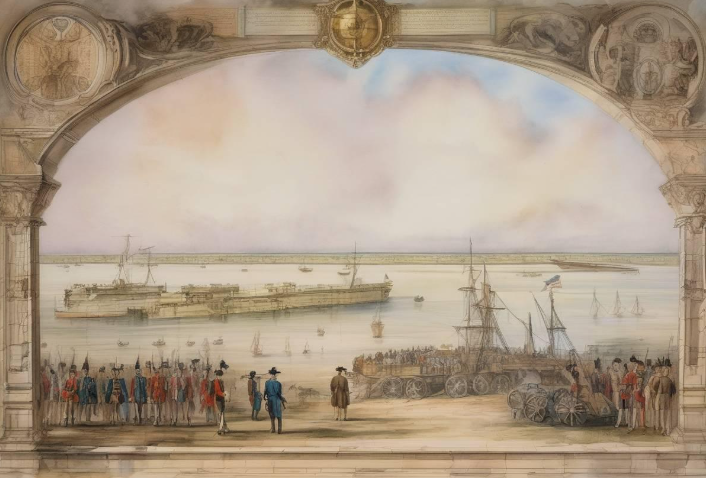
Two hundred and fifty years ago, in 1776, there was no Detroit skyline, no automobiles, no freeways, and no State of Michigan. Yet the place we now call Metro Detroit was already one of the most important crossroads in North America. It was a place where Native American nations, French settlers, British soldiers, fur traders, missionaries, and adventurers all crossed paths. Looking back 250 years gives us a fascinating picture of how this remarkable region began.
Detroit Was Already More Than 75 Years Old
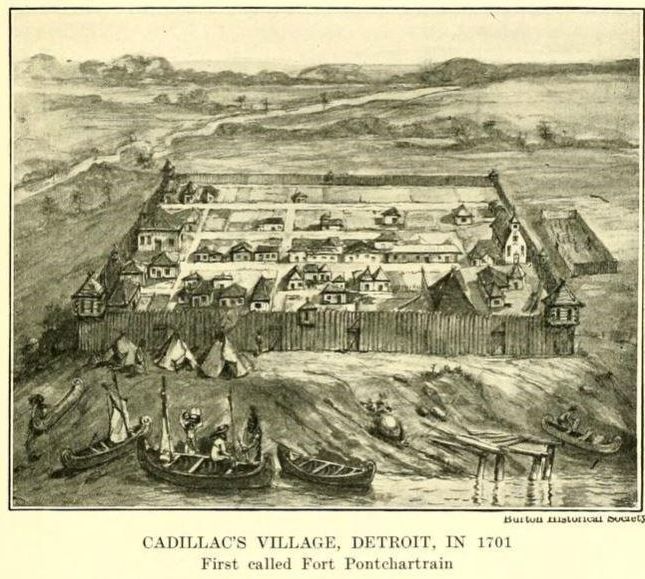
The city had been founded in 1701 by Antoine de la Mothe Cadillac as Fort Pontchartrain du Détroit. The French chose the location because the Detroit River—the “strait” connecting Lake Erie and Lake St. Clair—was one of the busiest transportation routes on the continent.
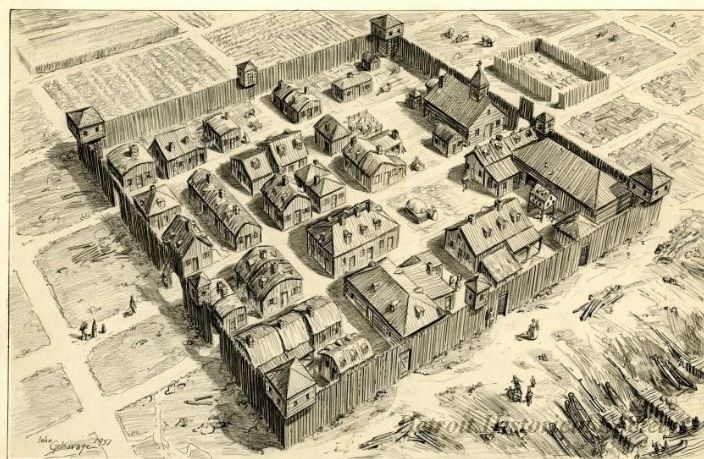
By 1776, Detroit was already an established frontier town with several hundred residents surrounded by wooden palisades. Nearly every building was made of wood, and the streets were little more than dirt lanes.
Under British Rule
Although Detroit had been founded by France, it was under British control in 1776. Britain had captured the region after the French and Indian War, and British troops occupied the fort.
Ironically, while Americans on the East Coast were declaring independence in Philadelphia, Detroit remained a loyal British military outpost. British commanders used Detroit as a base for operations throughout the Great Lakes during the American Revolutionary War.
The First People of Detroit
Long before Europeans arrived, southeastern Michigan had been home to Native American peoples for thousands of years.
Among those living in or traveling through the Detroit region were the:
- Odawa
- Ojibwe
- Potawatomi
- Wyandot
These nations hunted, fished, farmed, traded, and maintained extensive networks of trails throughout the Great Lakes. Many modern roads follow routes first established by Native peoples centuries ago.
Life Along the River
Nearly everyone lived close to the Detroit River. Transportation happened by canoe, sailboat, horseback, or on foot.
Families farmed long, narrow ribbon farms stretching back from the river. They raised wheat, corn, vegetables, cattle, pigs, and chickens while depending heavily on fishing and hunting.
The fur trade remained the area’s largest industry. Beaver pelts, deer hides, and other furs moved from the wilderness through Detroit to markets in Europe.
Faith Was Central
The first permanent church in Detroit was Ste. Anne de Detroit Catholic Church, established only days after the city’s founding in 1701.
By 1776, church bells regularly called settlers to worship. Missionaries had served both French settlers and Native American communities for decades.
Faith shaped daily life through baptisms, marriages, funerals, feast days, and the rhythms of the church calendar.
A Tiny Frontier Settlement
Today’s metropolitan Detroit is home to well over four million people.
In contrast, the Detroit of 1776 probably had fewer than 1,000 residents inside and immediately around the fort. Nearly everyone knew everyone else.
There were no factories, no skyscrapers, no railroads, no electricity, no telephones, and certainly no automobiles.
Yet because of its strategic location, Detroit was already one of the most valuable communities in the Great Lakes.
Wildlife Everywhere
The landscape would seem almost unimaginable today.
Dense hardwood forests covered much of southeastern Michigan. Massive oak, maple, elm, walnut, and beech trees surrounded the settlement.
Wildlife included:
- White-tailed deer
- Black bears
- Wolves
- Beavers
- River otters
- Bald eagles
- Passenger pigeons (now extinct)
The rivers teemed with fish, and wetlands stretched across much of the region.
A Place Worth Fighting For
Because Detroit controlled access between the upper and lower Great Lakes, nearly every major power wanted it.
The British recognized its military value.
The Americans hoped eventually to gain it.
Native nations fought to protect their homelands.
Over the next several decades, Detroit would pass from British control to the United States and eventually become the gateway to Michigan’s settlement and later the birthplace of the automobile industry.
Looking Back 250 Years
As America celebrates its 250th anniversary, it is worth remembering that Detroit’s story reaches even further into history. Long before the assembly line, Motown music, professional sports, or the Renaissance Center, this was a frontier village where Native peoples, European settlers, soldiers, traders, and missionaries met at one of the world’s great waterways.
The Detroit River remains what it was in 1776—a connecting passage between peoples and nations. The wooden fort has disappeared, but the strategic importance, resilience, and diversity that characterized early Detroit still define the region today.
Looking back 250 years reminds us that every great city begins with a handful of courageous people who believe that where they stand is worth building, protecting, and passing on to the next generation.
