
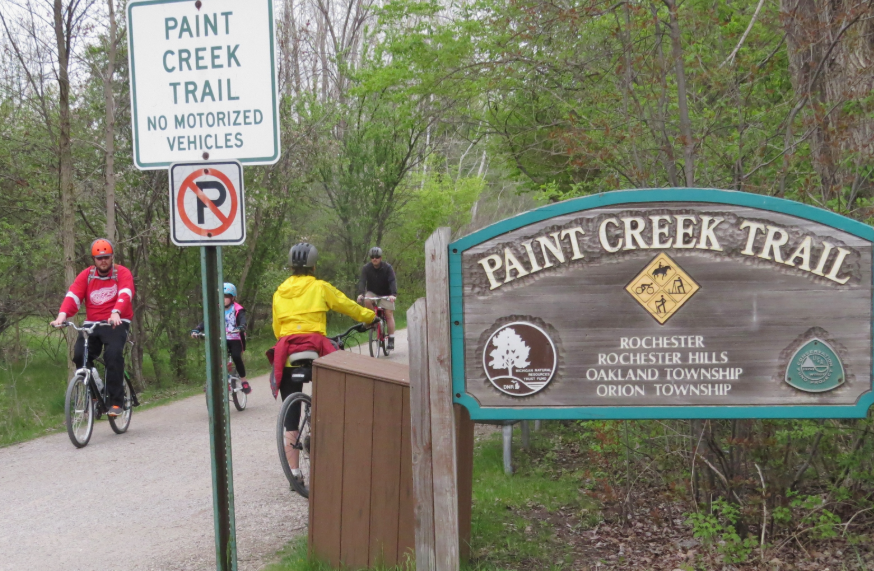
In a peaceful corner of Rochester near the historic Paint Creek Trail, an unusual little tradition quietly began appearing on a bridge that once carried railroad tracks through the community. Over time, couples, friends, and families started attaching padlocks to the bridge rails — small metal locks carrying names, initials, dates, hearts, and personal messages. What may have started with just a few locks slowly turned into a local expression of memory, affection, and commitment.
The setting itself helps explain why the tradition took root there. The bridge sits along the beautiful Paint Creek Trail, a former railroad corridor transformed into one of Michigan’s earliest rail-to-trail parks. Surrounded by trees, flowing water, walkers, cyclists, and the nearby charm of downtown Rochester, the bridge became a natural gathering point for photographs, conversations, and quiet moments. The old railroad route that once connected communities through industry now connects people through recreation and shared experiences.

The idea of “love locks” is not unique to Rochester. Similar traditions have appeared in cities around the world, especially on pedestrian bridges in romantic or scenic locations. Couples often attach a lock as a symbol of lasting love or friendship, sometimes tossing away the key afterward as a gesture of permanence. Yet what makes the Rochester version special is its local and unplanned character. There was no large tourism campaign or official project behind it — just ordinary people adding small reminders of their lives to a familiar community landmark.
Over the years, the locks have reflected more than romance alone. Some commemorate anniversaries or weddings, while others honor family relationships, friendships, or memories of loved ones. Visitors passing by often stop to read the names and messages, discovering a quiet mosaic of human stories attached to a simple bridge along the trail. In an age where so much communication disappears quickly online, the locks provide something physical, visible, and enduring.
The bridge also represents something important about local public spaces in our digital age. Many experiences today exist mainly on phones and social media feeds, vanishing almost as quickly as they appear. But places like this bridge remind us that communities still value tangible traditions rooted in real locations. People photograph the locks, text the pictures to friends, and share them online, but the actual experience still begins with physically visiting a meaningful place together.
For Metro Detroit residents, the Paint Creek Trail and its love-lock bridge offer one more example of the hidden treasures found throughout local communities. Sometimes the most memorable traditions are not the largest or most famous ones. They emerge quietly over time through the simple actions of ordinary people who leave behind small reminders that love, friendship, memory, and community still matter.
