
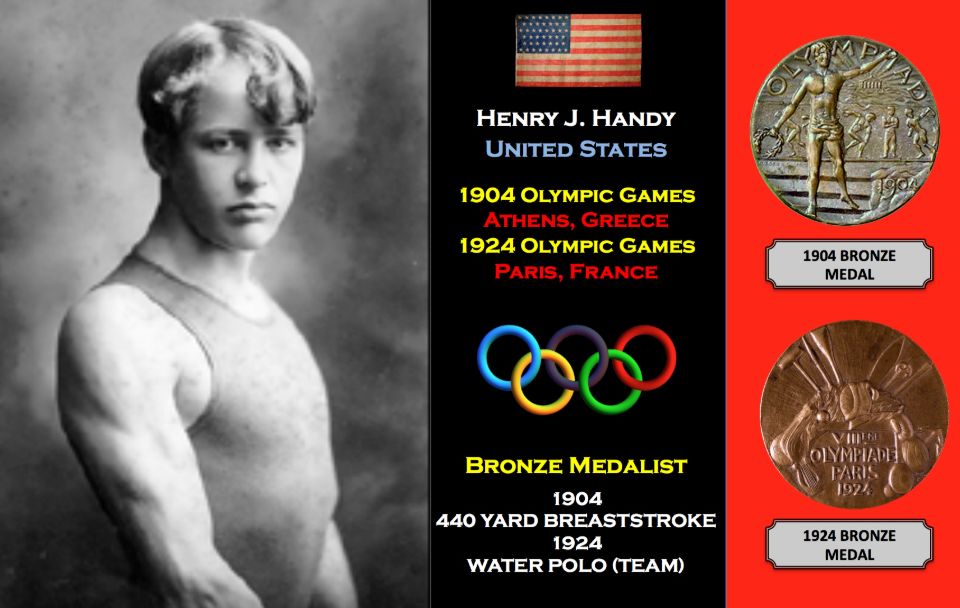
Henry Jamison (Jam) Handy (1886–1983) was a Detroit pioneer whose work shaped modern media, advertising, industrial filmmaking, and even the way America learned during the 20th century. Though widely unknown to the general public today, his influence is everywhere—from training films and corporate documentaries to Olympic sports promotion and early forms of what we now call “content marketing.”
Early Life and Olympic Athlete
Born in Philadelphia and raised in Chicago, Jam Handy showed early brilliance in both intellect and athletics. He became an Olympic swimmer, competing in the 1904 St. Louis Games, and later won a bronze medal in water polo at the 1924 Paris Olympics. His athletic discipline shaped his lifelong approach—clear goals, repetition, visual learning, and inspiration.
A Pioneer of Visual Education
Handy believed that pictures teach better than lectures. That conviction led him into the world of film during its infancy.
In the 1910s and 1920s, he began producing short films for business training, advertising, and public education—long before Hollywood or Madison Avenue realized the potential of visual storytelling.
He eventually founded The Jam Handy Organization (JHO) in Detroit, which became one of the world’s largest producers of industrial and educational films. By mid-century, JHO had produced more than 25,000 motion pictures and audiovisual pieces, making it the leading corporate film studio in the United States.
The Detroit Connection
From a cluster of buildings on East Grand Boulevard in Detroit—just steps from the former General Motors headquarters—Handy built a media powerhouse.
Detroit automakers were his biggest clients. Jam Handy films taught America:
- How to drive
- How assembly lines worked
- How engineering shaped modern life
- Why safety mattered
- How products were made and used
His organization made sales films, training films, engineering explainers, wartime instruction films, and even charming animation. Many Detroiters of the 1940s–1960s saw Handy productions without even knowing it, often through school projectors, company meetings, or community centers.
Wartime Service
During World War II, the U.S. military relied heavily on Handy’s team. He produced thousands of films teaching soldiers how to operate equipment, maintain vehicles, interpret intelligence, and work together across units.
These films helped accelerate military training at a time when speed and clarity were essential. Some historians argue that Handy’s contributions saved lives by teaching complex material quickly and visually.
Legacy: The Father of “Explainer Media”
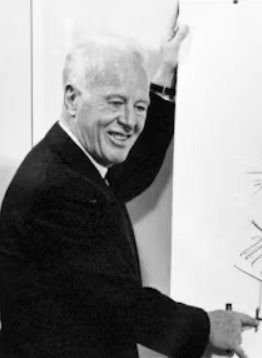
Jam Handy anticipated YouTube “how-to” videos, TED-style educational talks, and corporate training videos by nearly 100 years. His approach was simple:
Show the viewer. Don’t just tell them.
His legacy includes:
- The use of film as a universal teaching tool
- Early corporate documentaries
- Visual storytelling for mass learning
- The evolution of branded content
- The industrial film movement rooted in Detroit
Although he lived to be 99 years old, passing away in 1983, his fingerprints remain on nearly every form of visual education and corporate communication today.
Why Jam Handy Still Matters
At a time when smartphones are the new public squares and video is the dominant language of communication, Handy’s vision feels remarkably prophetic. He believed that good content—clear, visual, honest, and helpful—could teach millions.
In a very real sense, he helped invent the world that we have in the digital age:
a world where visual storytelling can reach everyone, everywhere.
